
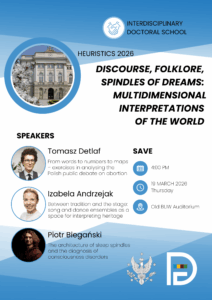
Heuristics – Discourse, folklore, spindles of dreams: multidimensional interpretations of the world
The “Heuristics” series was launched on the initiative of the Rector of the University of Warsaw, Prof. Alojzy Z. Nowak, and consists of four meetings per year. At each meeting, doctoral students, with the support of their advisors, present the objectives and findings of their research and then engage in a discussion with the audience.
– We thank His Magnificence for the wonderful “Heuristics” initiative. It is a space that allows us to see the direction in which the academic future of our Alma Mater is heading. It is also a unique opportunity to come together across divisions or stages of our academic careers and reflect together on how we want to co-create that future. I hope we can all fully harness the potential of such meetings,” said Justyna Jaworska, chair of the University of Warsaw Doctoral Student Council.
During Thursday’s meeting titled “Discourse, Folklore, Spindles of Sleep: Multidimensional Interpretations of the World,” organized by MSD, the following researchers presented their projects:
- Tomasz Detlaf, M.A., along with his advisors – From words to numbers to maps – exercises in analysing the Polish public debate on abortion
- Izabela Andrzejak, M.A., together with her advisors – Between tradition and the stage: song and dance ensembles as a space for interpreting heritage
- Piotr Biegański, M.A., together with his advisors – The architecture of dream spindles and the diagnosis of consciousness disorders
This year’s edition of Heurystyk was simultaneously interpreted into English via the ZOOM platform.
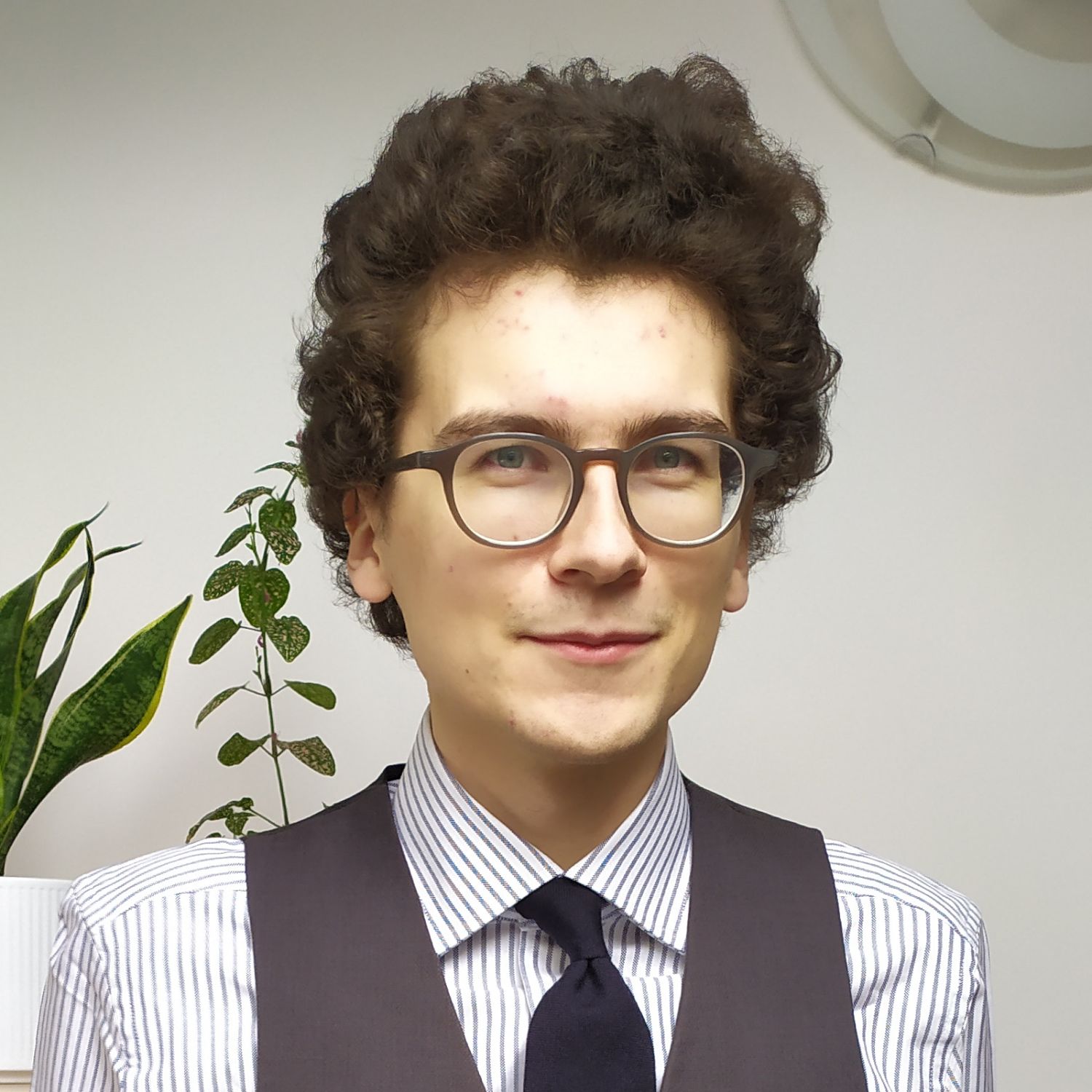
Tomasz Detlaf
Scientific Interests:
A graduate of digital sociology, as well as sociology and philosophy, from the MISH College at the University of Warsaw. Researcher on the ERC project Abortion Figurations: Using Human Rights to Change Abortion Law and the NCN Opus project Competition in the Field of Science: Power and Knowledge Production in Selected Disciplines in Poland. His current research interests focus on the use of computational methods for automatic text analysis in sociological research.
Presentation Summary:
The abortion debate is undoubtedly one of the most significant topics in Polish public discourse since 1989, and studying it can help us better understand the transformations in Polish political culture as well as the overall dynamics of public disputes. Nevertheless, there remains a lack of research on the overall structure and dynamics of this debate over the years. To fill this gap, my project examines how the Polish abortion debate is structured and how this structure has evolved over the years. I intend to answer these questions by creating discourse maps that illustrate how texts, actors, and positions interconnect at any given moment. To this end, I use automated text analysis techniques to process statements from parliamentary debates and newspaper articles. In my presentation, I will outline the research project, discuss the associated theoretical, methodological, and legal challenges, and present preliminary results from the initial analyses.
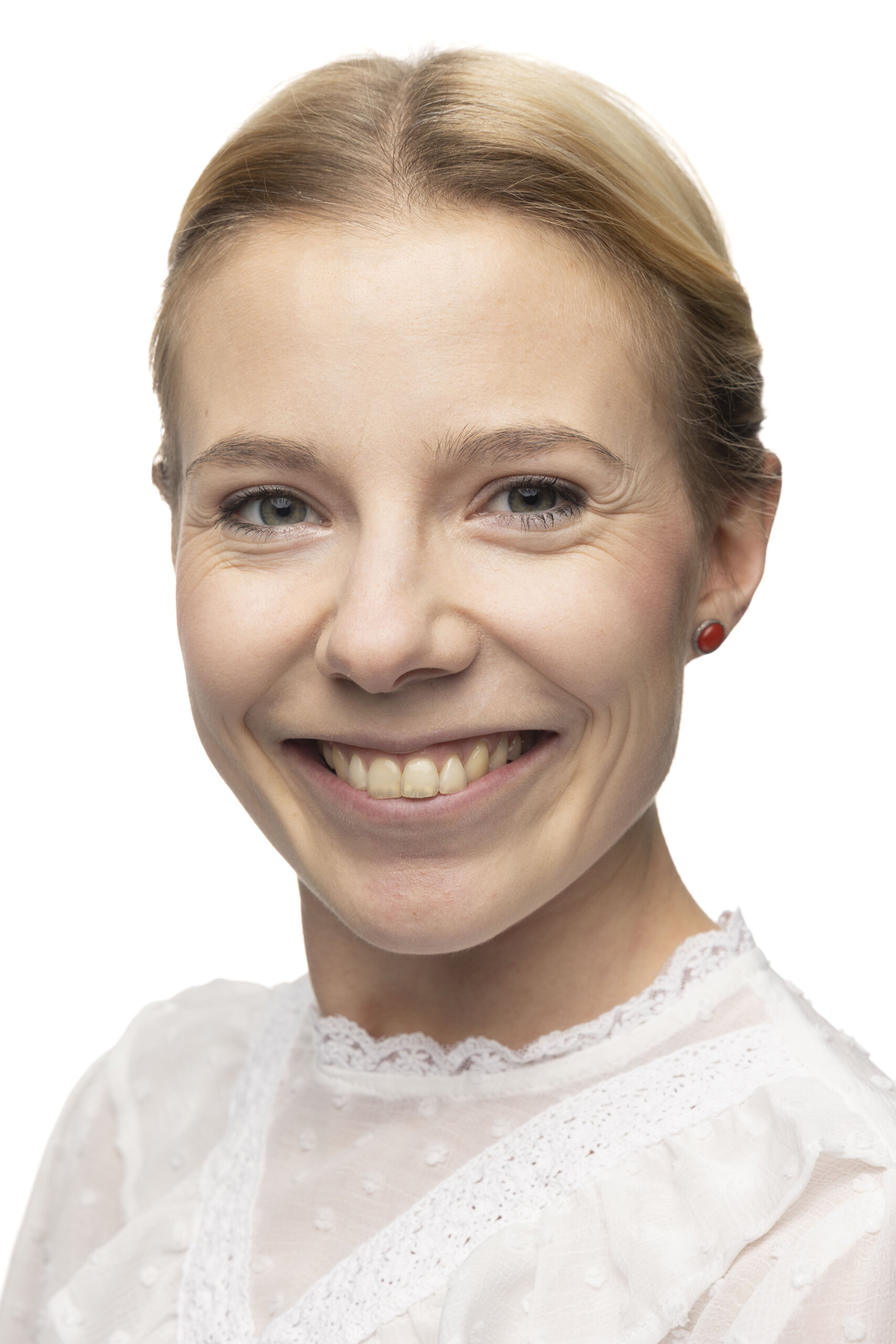
Izabela Andrzejak
Scientific Interests:
She represents the Institute of Musicology at the University of Warsaw and holds a Master’s degree in Cultural Studies (University of Łódź) and a Master of Arts in Choreography and Dance Theory (Fryderyk Chopin University of Music in Warsaw). She is a member of the Polish Choreology Forum. Since 2016, I have been a ballet artist with the T. Sygietyński State Folk Song and Dance Ensemble “Mazowsze,” as well as a dance instructor at the ‘Karolin’ Polish Folklore Center. I appeared in Paweł Pawlikowski’s Oscar-nominated film “Cold War” as a dancer with the “Mazurek” ensemble. I am a fellow of the first edition of the Joseph Conrad Fellowship Program for Young Humanists and the National Institute of Music and Dance program for professional dancers aimed at expanding professional competencies, as well as the “Priority Research Areas” Scholarship Program for doctoral students in the category: Crossing the Boundaries of the Humanities, organized by the University of Warsaw’s Research University Initiative of Excellence. My research focuses on the study of urban, stylized, post-factory, and academic song and dance ensembles from the perspective of questions posed by contemporary humanities.
Presentation Summary:
Song and dance ensembles remain one of the most important settings for the practice of Polish musical and dance traditions in contemporary Poland. Although their activities are often viewed primarily through the lens of the theatrical stylization of folklore, in reality they also serve as a space for social participation in culture and a venue for the transmission of folk songs and dances. The presentation will feature preliminary findings from research conducted as part of a doctoral dissertation currently in progress, focusing on the role of song and dance ensembles as environments for interpreting Poland’s musical and dance heritage.
The research material includes in-depth interviews conducted with artists and the management of four stylized ensembles: Igloopolanie, Resovia Saltans, Harnam, and the Lubuski Song and Dance Ensemble. An analysis of the participants’ statements allows us to examine the motivations driving the young people who join the ranks of these folklore ensembles.
Particular attention will be devoted to how song and dance ensembles have become an important environment for transmitting and reinterpreting musical and dance traditions today, given the limited presence of this subject matter in formal education.
Piotr Biegański
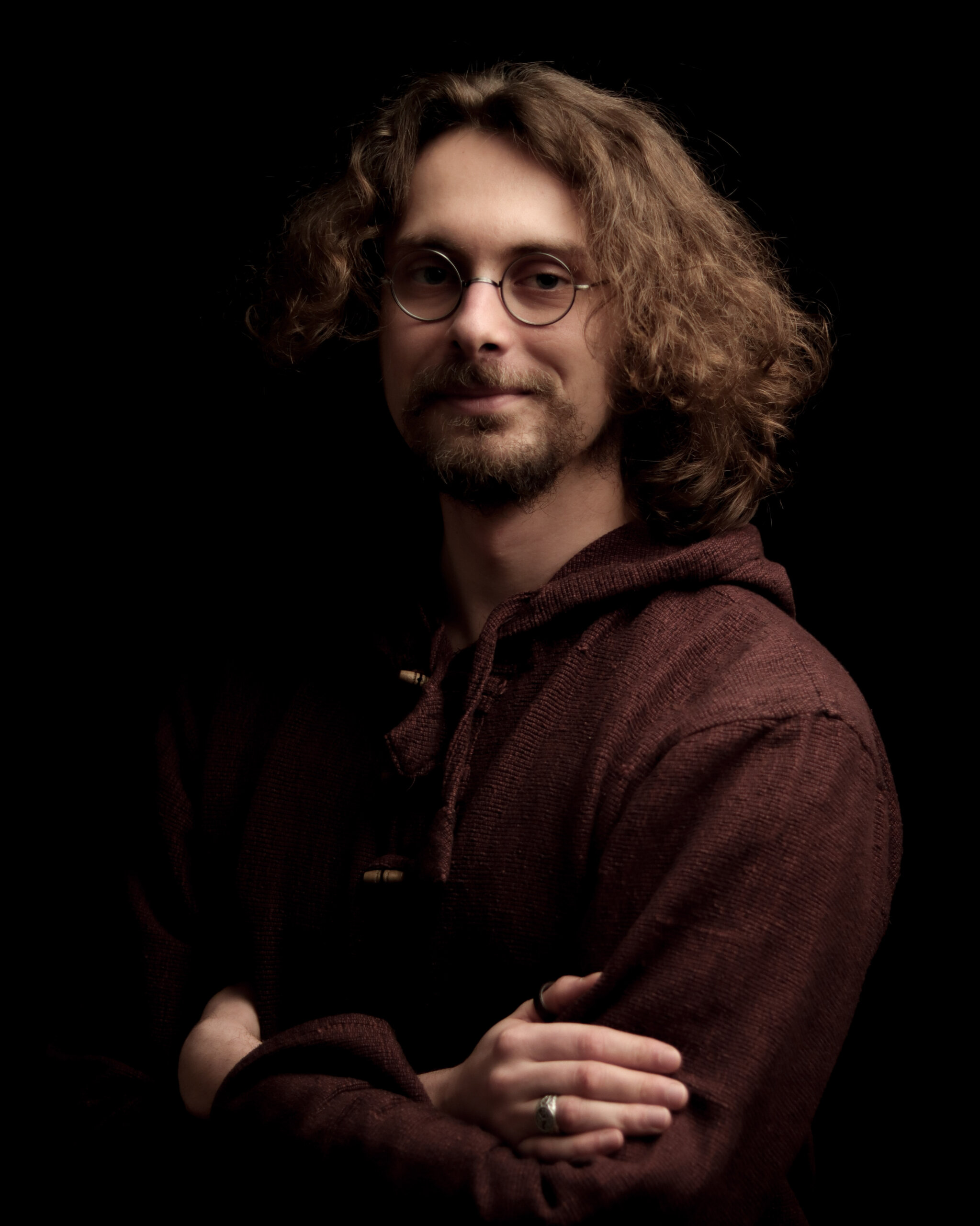
Scientific Interests:
I earned a master’s degree in physical sciences and a bachelor’s degree in philosophy from the University of Warsaw. My research interests focus on the methodology of physiological signal analysis, particularly EEG and actigraphy, and their application in the diagnosis of consciousness and sleep disorders. As part of my doctoral research, I am working to develop diagnostic tools based on fundamental physical theories and physiological measurements—as opposed to behavioral medical standards. I am also the founder of the Association for Open Science, which conducts meta-scientific research and educational activities in the fields of the philosophy of science and quantitative research methodology. I am drawn to Kuhn’s vision of science—as the solving of puzzles within an axiomatic system.
Presentation Summary:
Diagnosing disorders of consciousness is a complex task, given the extreme difficulty in communicating with the patient—or, in many cases, the complete lack thereof; at the same time, an accurate diagnosis is crucial for selecting effective treatment and rehabilitation methods. One hypothesis in the literature links the patient’s condition to the architecture of sleep, as parameterized by EEG recordings—the more the distribution of structures present during sleep, known as graphoelements, resembles that observed in healthy individuals in terms of time, frequency, and space, the better the patient’s condition should be. In this presentation, I will focus on sleep spindles—structures defining one of the four stages into which sleep is divided—by describing an innovative method for their spatiotemporal parameterization based on the multivariate Matching Pursuit algorithm. This method reproduces effects known from the literature with fewer a priori assumptions, while offering hope for diagnostic potential with further development.